
2024 - 2025
UCLA Simulation Center Annual Report
Dear Colleagues and Friends,
Having wrapped up 2025 and begun a new year, we want to express our heartfelt gratitude and share with you our inaugural Sim Center Annual Report.
This report provides stories of recent celebrations as well as highlights from the past academic year, a walk down memory lane into the evolution of healthcare simulation at UCLA, and a vision of hope for the year ahead.
The past five years have been marked by a period of extraordinary challenges, innovation, and transformation for the UCLA Simulation Center. We are incredibly proud of our team's resilience and creativity, and the many accomplishments that underscore our Center’s expanding role as a leader in experiential learning, faculty development, and translational simulation across UCLA Health and beyond.
Continue reading the directors' welcome
After navigating simulation training during the COVID-19 pandemic and having to conduct simulations in a temporary space without our usual resources for three years while our building was under construction, we were thrilled to return to the beautifully renovated Rosenfeld Hall. Over the last two years, we have worked diligently to reestablish programs that were paused due to the pandemic and space constraints. With a full team once again, our clinical training programs continue to grow in scale and impact, supporting thousands of learners across medicine, nursing, dentistry, and allied health.
Notable achievements include the addition of new simulation programs to the DGSOM HEALS curriculum, the expansion of POCUS training and outreach programs, and increased interprofessional team training. We are deeply grateful to the many faculty members and clinical educators who partnered with us to design immersive learning experiences for our trainees and practitioners.
Innovation remains central to our mission. This year, we explored innovative learning platforms by piloting novel AI technologies and tools, creating scenarios designed to strengthen communication skills, feedback, and debriefing practices. Our team also collaborated closely with UCLA Health leaders to integrate simulation into quality, safety, and systems improvement efforts, helping identify latent safety threats, improve clinical workflows, and enhance readiness for high-stakes events.
This year also marked exciting growth in research and scholarship. Our faculty and trainees presented nationally recognized work in simulation-based education, debriefing science, communication training, and artificial intelligence. We are proud that multiple peer-reviewed publications, invited presentations, and national awards emerged from projects incubated right here at UCLA.
Above all, our work remains grounded in service to our learners, faculty partners, and the patients and families who benefit from safer, more humane, and more effective care. None of these accomplishments would be possible without the dedication and creativity of our exceptional staff, faculty champions, collaborators, and supporters. We are grateful to our educators who give their time and expertise to teach in the Sim Center and to create valuable learning experiences for all who come through our doors.
We are proud to work with our education partners from the Dean's Office, who along with our amazing simulation team, continue to provide excellent quality education and support to our training programs. We extend our deepest thanks to our donors and educator partners, whose commitment to simulation training enables us to advance cutting-edge educational and patient safety initiatives.
Looking ahead, we are energized by new opportunities: leveraging AI tools to expand deliberate practice opportunities for student learning and faculty development, continuing to grow interprofessional team training, and innovating through educational research. Together, we are shaping the next generation of healthcare professionals.
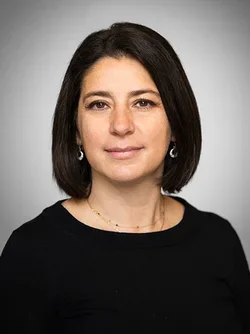
Cecilia Canales, MD, MPH, MSc Medical Director
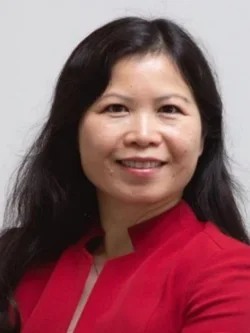
Yue-Ming Huang, EdD, MHS, FSSH Executive Director
Thank you for joining us on this journey.
We look forward to another year of discovery, collaboration, and excellence.
- Ceci and Yue-Ming
Simulation at UCLA
MISSION
Our mission is to leverage simulation, teamwork, technology, research, and best practices to improve patient outcomes and healthcare education.
VISION
Our vision is to create a safer, kinder and more equitable health system through simulation-based learning experiences.
VALUES
Our values are aligned with UCLA Health’s core values and the DGSOM Cultural North Star: Do what’s right. Make things better. Be kind.
Our Team
The UCLA Simulation Center is powered by a dedicated team with expertise and experience in healthcare education, simulation technology, standardized patient methodology, and educational design. Together, with clinical expertise from our dedicated instructors, we support thousands of learners each year, creating transformative experiences that prepare the next generation of healthcare professionals for excellence in patient care.
Our Partners
Success in modern healthcare relies on teamwork, and our center reflects this reality through close collaboration with our primary educational partners and fellow simulation stakeholders listed below to provide comprehensive, high-fidelity training across different medical disciplines and health profession.
2024 - 2025 By the Numbers
1,400
16,595
33,802
200+
119,698
95%
Technology-Based Simulation
Manikin and skills-based learning held within UCLA campus.
854
51,685
Equipment Rentals
5,411 Rentals | 2,500+ Learner Days
- UME dominates rentals (>75% of learner days), driven by the HEALS curriculum.
- Butterfly portable ultrasounds are the primary driver for asynchronous learning.
- Rentals have shown steady year-overyear growth since 2021.
Standardized Patients
379 Sessions | 65,572 Learner Hours
- UME accounts for most of the SP sessions, emphasizing communication skills.
- High Efficiency: Rosenfeld Hall's 16 exam rooms allow us to serve more students per session.
- Learner hours have shown consistent growth since 2020.
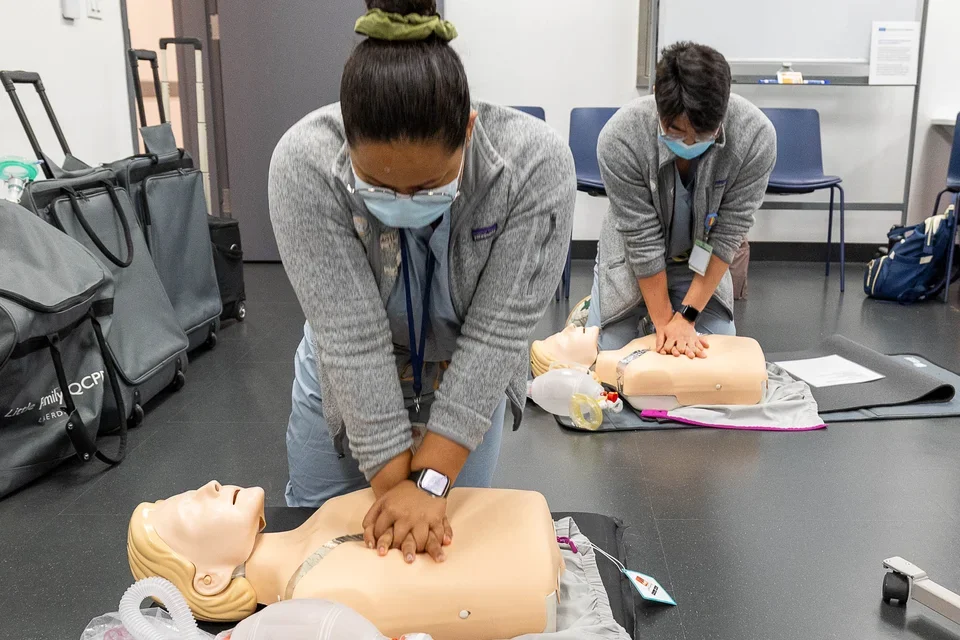
GME leads in session count due to 16 different residency training programs.
UME generates highest learner hours despite fewer sessions, as medical student simulations run multiple rooms concurrently.
Hospital training is driven primarily by ACLS, PALS and BLS certification courses.
Aggregate Analysis
UME programming comprises nearly 50% of all sessions and over 60% of total learner hours. This aligns directly with our mission to serve the David Geffen School of Medicine.
GME learners focus more on technology-based sessions (high-acuity scenarios and procedural skills training) and less on SP-based sessions or equipment rentals, reflecting their advanced clinical exposure and patient care needs.
To learn more about how to access Sim Center resources, please visit our website and submit a request to schedule a sim session, book our talented SPs, or rent equipment.
Featured Stories
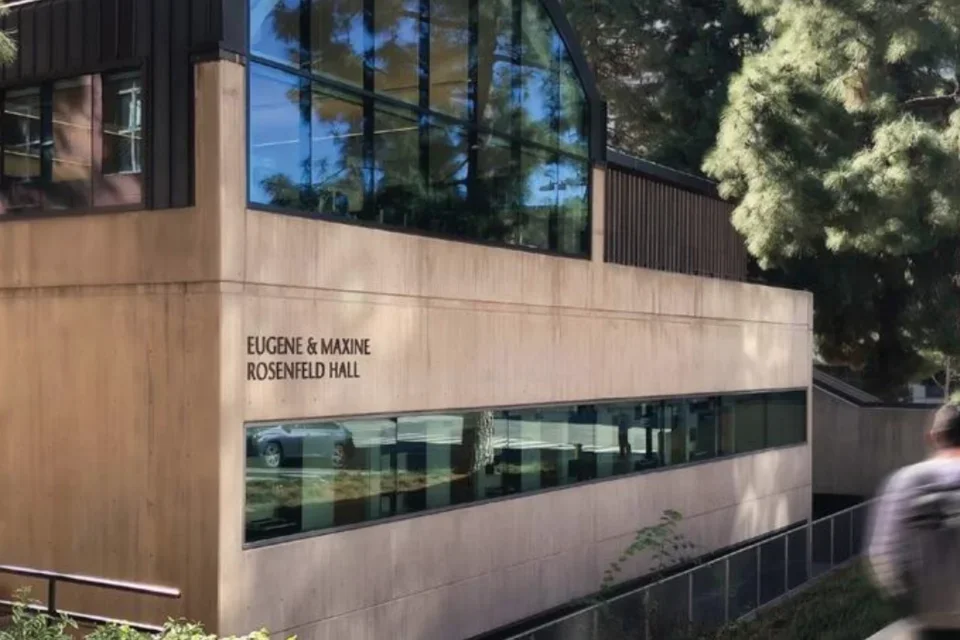
A Legacy of Innovation: The Journey of Rosenfeld Hall
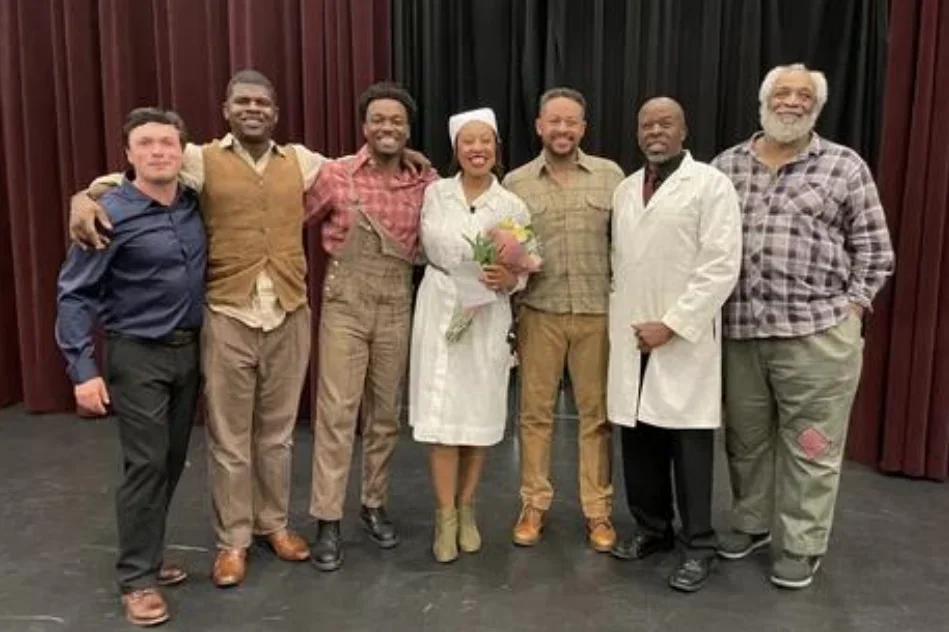
Using Standardized Patients to Foster Inclusive Healthcare

Celebrating Art: Dr. Jack Kurtz Artwork Reception
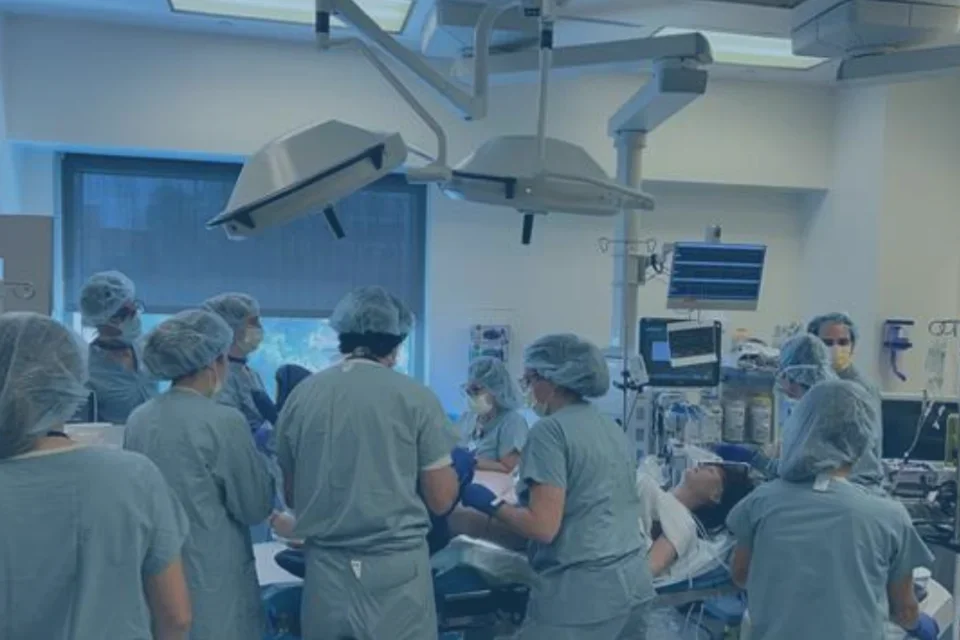
In Situ L&D Simulation: From Simulation to Real Emergency
Technology and Curriculum Interventions
Intersessions: OR Walkthrough
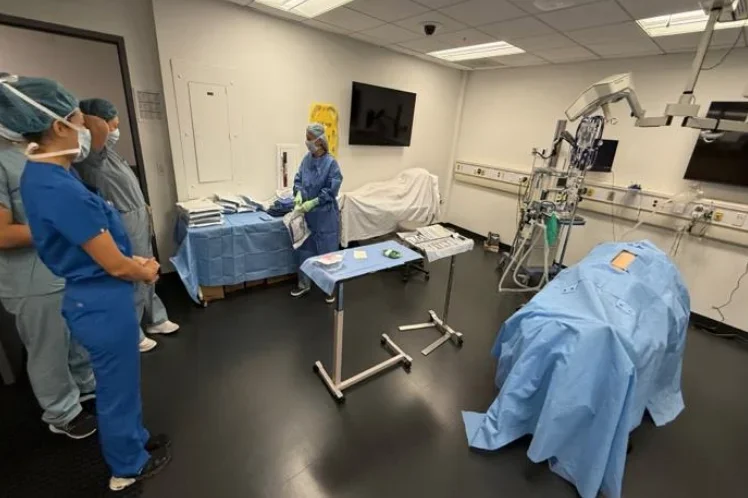
Recognizing a need to better prepare MS2s for their surgery rotations, the UCLA Simulation Center partnered with the School of Medicine to introduce a new OR simulation activity to the Intersessions curriculum.
Launched in October 2024, this activity helps students perform key procedures and demonstrate proper etiquette in the operating room. The curriculum focuses on critical safety skills including staff introductions, scrubbing, gowning, gloving, and maintaining sterile fields.
Leadership Partners
- Dr. Antonio Pessegueiro (Director for Intersessions)
- Dr. Justin Wagner (Surgery Clerkship Chair)
- Dr. Ian MacQueen (Surgery Clerkship Chair)
Regional Critical Care Fellow Ultrasound Conference
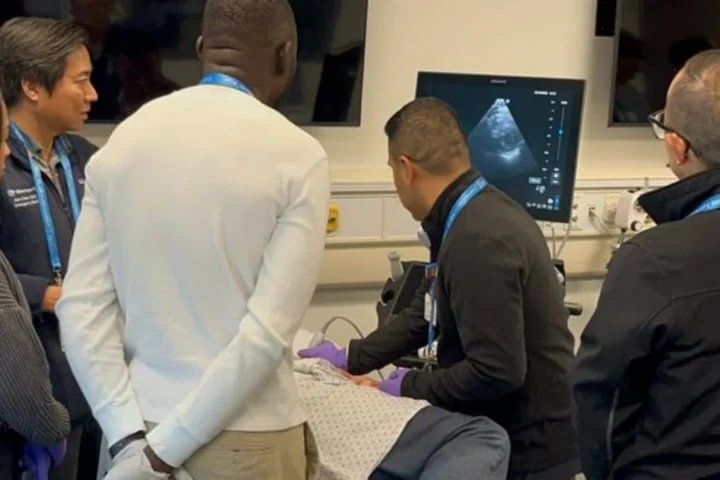
In October 2024, faculty from UCLA Critical Care Medicine teams partnered with the Simulation Center to host the 9th Regional Southern California Critical Care Fellow Ultrasound Conference. This marked the return of the conference to UCLA after a 5-year hiatus.
Led by course chairs Drs. George Lim and Igor Barjaktarevic, this 2-day conference focused on teaching pointof-care ultrasound (POCUS) to anesthesia, medicine, and surgical critical care fellows.
Participating Institutions
- UCLA
- USC
- Cedars Sinai
- UC Irvine
Interprofessional Team Training
Anesthesia & Nursing Critical Incident Sim
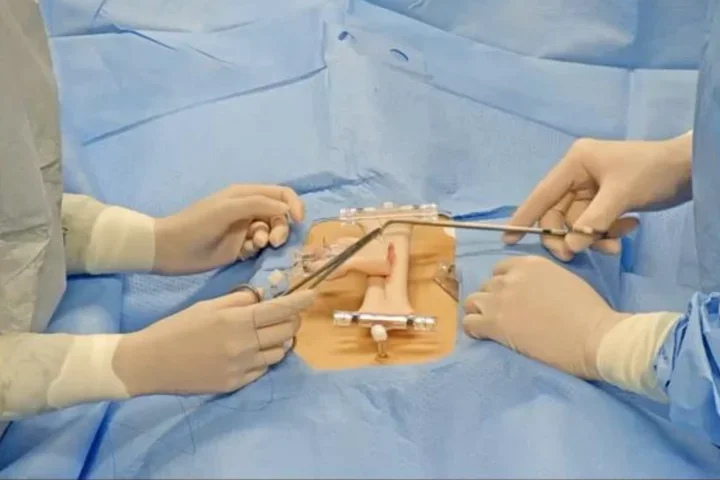
To better prepare OR nurses to recognize perioperative emergencies, the Simulation Center partnered with nursing colleagues from the Westwood Ambulatory Surgery Center and the Anesthesiology Department to create a new interprofessional curriculum.
OR nurses with less than 5 years of experience now participate in team training exercises during weekly Critical Incident simulation sessions alongside anesthesia residents.
This initiative aims to improve communication, teamwork, and proficiency with emergency equipment.
Led by Dr. Victor Duval and Kharen Palacio, new Nursing Educational Objectives were added:
- Align nursing strategic goals for collaborative practice
- Identify knowledge gaps in crisis management (e.g., LAST, anaphylaxis, MH, SVT)
- Improve nursing competency and contribution to team-based care
Operating Room Team Training
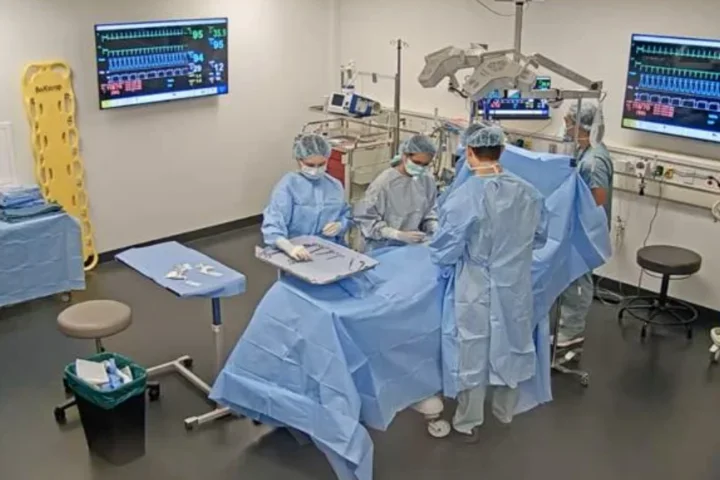
Originally implemented in 2006, OR Team Training was revived in 2023 following the move to Rosenfeld Hall. Spearheaded by Dr. Christine Nguyen-Buckley (Anesthesiology), this program brings the full OR team back together to learn in a simulated environment.
Surgery residents, circulating nurses, and scrub techs join anesthesia residents to manage complex cases as a unified team. Following the simulation, the group debriefs to discuss lessons learned and share perspectives to better understand each other's roles.
Program Leadership
- Dr. Christine Nguyen-Buckley (Anesthesiology)
- Drs. Areti Tillou & James Wu (Surgery)
- Kharen Palacio (Nursing)
Partner Highlights
Partner Highlight: CASIT
Partner Highlight: Nursing
Partner Highlight: Center for Prehospital Care

Educator Highlights
Meet our most active teaching partners
Research and Innovation
Active Research/Innovation Projects
The UCLA Simulation Center conducts numerous ongoing research studies exploring innovations in medical education and simulation. This work evaluates new technology and emerging cutting-edge approaches to healthcare training, exploring its potential to improve future clinical education and patient care. Below are some of our ongoing projects.
AI Phone Call Simulation with Feedback (PI: W. Scott Comulada, DrPH)
We are investigating the use of AI voice-driven simulated phone calls and AI generated feedback to improve trainees’ clinical communication skills and confidence.
Debriefing Dojo: AI-enhanced debriefing practice (PI: Yue-Ming Huang, EdD)
We are exploring how AI-supported conversation simulation can reinforce debriefing skill development for medical educators and facilitators. Selected as a Bright Ideas Showcase finalist at the 2025 AMA ChangeMedEd Conference.
Perioperative Language Equity Training (PI: Cecilia Canales, MD, MPH)
We are exploring how immersive VR approaches can improve clinician / interpreter communication and perioperative language equity for non-English speaking patients
E-FAST Ultrasound Simulation (PI: Alan Chiem, MD)
We are evaluating screen-based virtual simulation for teaching E-FAST ultrasound skills and knowledge for use in trauma settings.
VR Pathology Lab Tour (PI: Kene Ojukwu, MD)
We are examining the educational impact of an immersive VR module that follows the journey of a specimen through pathology laboratory environments and workflows.
Virtual Tour of Rosenfeld Hall (created by Daniel Weisman, MFA)
Our online, interactive tour of the UCLA Simulation Center and CASIT facilities at Rosenfeld Hall allows user groups to explore the full facility remotely.
Publications and Presentations
Pilot Test of an AI Voice-Driven Simulation With Feedback for Medical Students to Practice Discussing Diagnostic Test Results With Patients
Results from a pilot study evaluating an AI voice-driven simulation that provides feedback to medical students practicing patient-centered communication of diagnostic test results. Author: W. Scott Comulada, et al. Cureus (2025). doi:10.7759/cureus.95606
AI-Driven Communication Training for Medical Students to Practice Discussing Abnormal Mammogram Results With Patients: Development of a GPT-4 Powered Virtual Simulated Patient
Published on our development of a screen-based virtual simulated patient training and our exploration of novel prompt design methods for crafting AI powered simulation scenarios. Author: Daniel Weisman, et al. JMIR Formative Research (2025). doi:10.2196/65670
Developing an AI-Powered Training Simulation to Help Medical Students Rehearse Difficult Conversations with Patients
Described the development of an AI-driven simulation that allows medical students to practice and receive feedback on delivering difficult clinical news to patients. Presented by: Daniel Weisman, W. Scott Comulada, Yue Ming Huang International Meeting on Simulation in Healthcare (IMSH) 2025; Orlando, FL.
Language Equity in Perioperative Neurocognitive Disorders: Development of a Screen-Based Virtual Simulation
Presented our 360-degree screen-based simulations to train anesthesiology residents on effective communication with non-English speaking patients and interpreters. Presented by: Daniel Weisman, Yue Ming Huang, Cecilia Canales International Meeting on Simulation in Healthcare (IMSH) 2025; Orlando, FL
Looking Ahead
This year has been defined by expansion, innovation, and a deepened commitment to our core mission. As healthcare evolves, so too must the ways in which we train the next generation of providers.
We have much to look forward to and explore together. Among them is leveraging AI simulations to provide more practical opportunities for students and trainees to rehearse difficult conversations, improve communication skills and make critical patient management decisions in a safe learning environment, and to provide faculty development for our educators to streamline curriculum development and create valuable immersive learning experiences.
Our efforts are focused on creating precision education and making training efficient without losing the human touch, to ensure that every learner who enters our center leaves better prepared to provide safe, effective, and compassionate care.
Keep reading about what comes next
We have been awarded grants from the Bedari Kindness Institute and the UCLA Teaching & Learning Center which will enable us to continue our research and innovations despite the ongoing budget cuts. Partnering with Dr. Serena Wang, Chair of the AI for Medical Education Council, and other leaders on AI at UCLA Health and DGSOM, we are exploring new ways to train healthcare professionals in the age of AI. We are offering workshops to learn how to ethically and effectively use AI tools for medical education and clinical simulations to teach compassionate communication skills, and all are welcome to enroll in our course Foundations in AI for Medical Education on BruinLearn to learn more. We are also expanding our translational research to study patient and workflow outcomes through interprofessional in-situ simulations in our Ronald Reagan and Santa Monica hospitals.
While challenges remain, we are confident that through strategic leadership, collaboration with our talented faculty and staff to secure and share resources, and the generosity of our donors and healthcare partners, we will continue moving forward to sustain our position as a global leader in simulation training. We look forward to innovating in AY25-26 with all of you!
Giving opportunities are available, and we welcome all gifts to the UCLA Simulation Center.