
A Legacy of Innovation: The Journey of Rosenfeld Hall
From Humble Beginnings to a State-of-the-Art Training Hub
Humble Beginnings
In 1996, the UCLA Simulation Center began with a single vision: to revolutionize medical training through simulation technology. Dr. Randolph Steadman, with the support of Dr. Patricia Kapur, purchased UCLA's first Human Patient Simulator — a METI full-body computerized manikin affectionately dubbed "Stan" — for the Department of Anesthesiology.
Housed in a shared laboratory space on the fifth floor of the Center for Health Sciences, Stan featured heart and lung sounds and allowed for airway management training. While initially only used for anesthesiology resident training, it soon became clear that simulation had the potential to transform how healthcare professionals learn.
A Growing Movement
UCLA quickly became a pioneer. By 2001, the medical school replaced the traditional MS1 cardiovascular physiology animal laboratory with simulation-based training—a first of its kind. As the program proved its value, it expanded into the third and fourthyear curriculums. By 2009, the center had relocated to 700 Westwood Plaza, occupying 12,000 square feet. But the true transformation was yet to come.
The Rosenfeld Vision
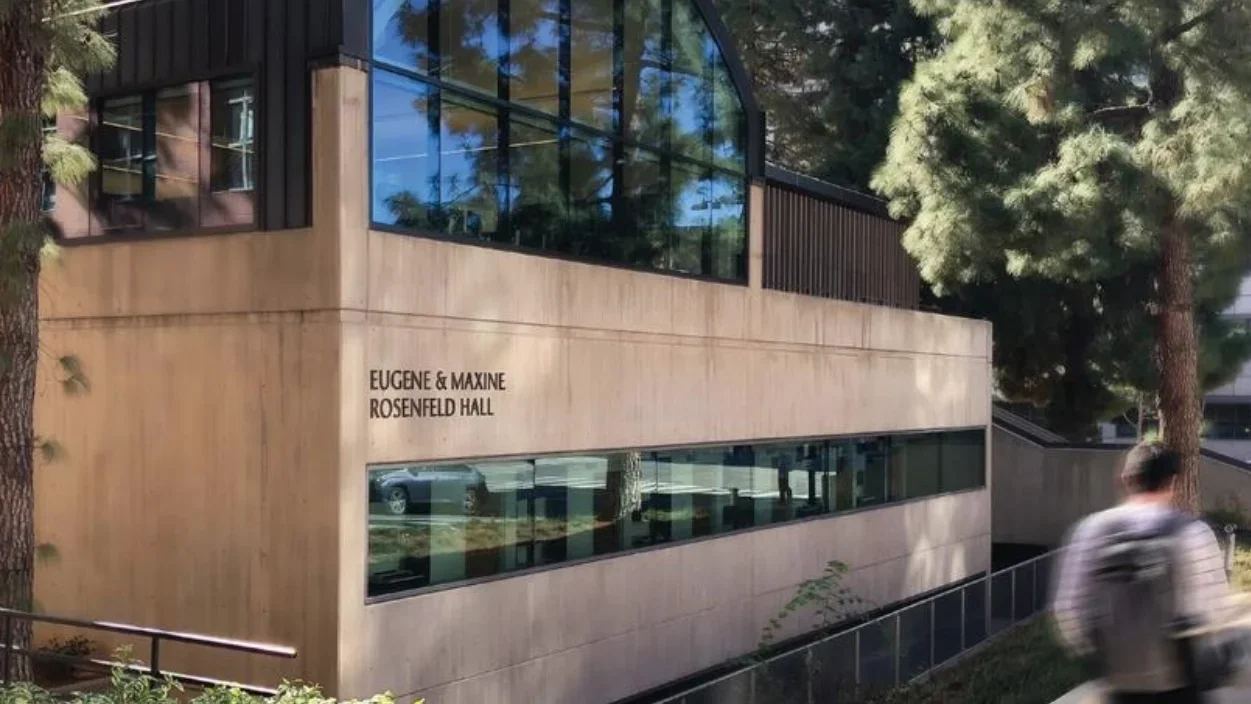
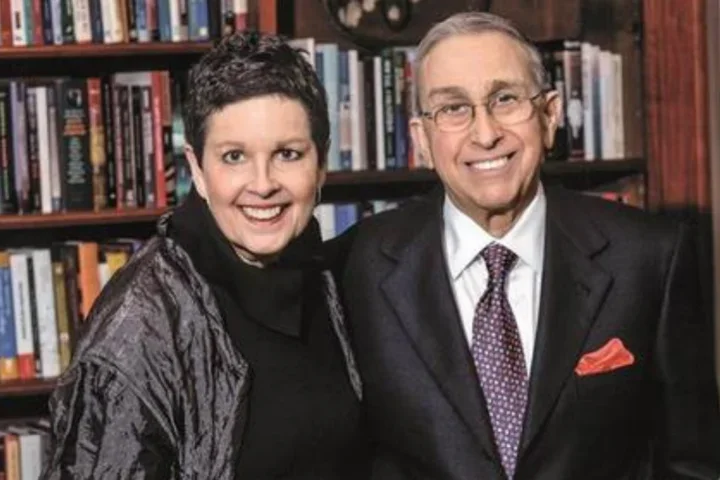
Eugene and Maxine Rosenfeld, generous benefactors since 1978, recognized an opportunity to make a profound impact. Their initial gifts in 2006 and 2016 elevated the center from a departmental resource to a core education unit, enabling the purchase of state-of-the-art equipment like virtual reality headsets and full body patient simulators. In 2018, they made an extraordinary commitment: a $20 million gift to renovate 700 Westwood Plaza into a dedicated facility bearing their name: Eugene & Maxine Rosenfeld Hall.
Building Through a Pandemic
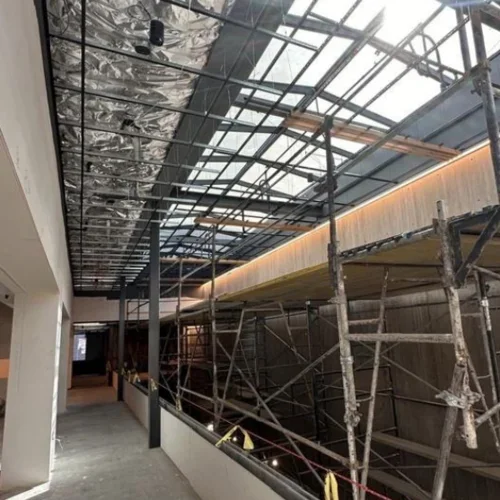
The timing proved both fortuitous and challenging. In January 2021, at the height of the COVID-19 pandemic, construction on Rosenfeld Hall began. The Simulation Center moved to temporary space just one-third the size of its previous facility yet remained open as an essential training resource for PPE protocols and COVID-19 response.
What was intended to be an 18-month project doubled in time due to global supply chain challenges. Finally, on October 30, 2023, Rosenfeld Hall officially opened its doors. The 30,600-square-foot, three-story facility represents a huge leap in capacity, with cutting-edge audiovisual systems that connect wirelessly across rooms and floors, can link to Ronald Reagan UCLA Medical Center operating rooms, and enable recording and live streaming of training sessions.
1996
2001
2006
2016
2018
New Era Begins: Inside Rosenfeld Hall
On June 15, 2023, a private dedication reception was held to honor Eugene and Maxine Rosenfeld and their family and friends.
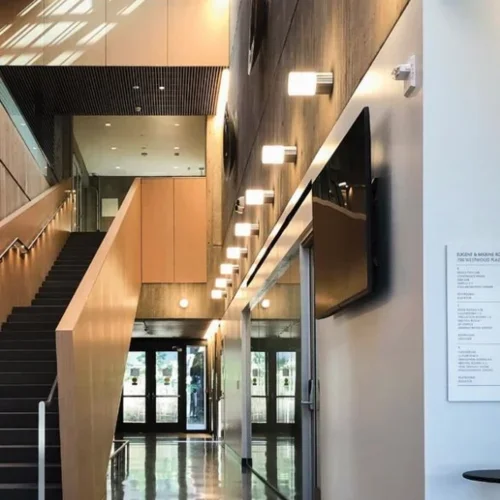
On October 30, 2023, Rosenfeld Hall officially opened its doors at the public Grand Opening with an interactive hands-on tour to showcase the latest technologies.
The 30,600-square-foot, three-story facility represents a huge leap in simulation training capacity and capability.
Level 1: Standardized Patient Program
A dedicated suite with 16 exam rooms, 4 inpatient simulation rooms, a divisible classroom, conference room and sophisticated monitoring and control rooms for OSCEs and simulation scenarios.
Level 2: CASIT and Innovation
Home to the Center for Advanced Surgical & Interventional Technology. Features a large education lab with 24 workstations, surgical robotics, and an R&D lab for collaborative innovation with UCLA Engineering.
Level A: Simulation Core
Features 5 inpatient simulation rooms with full medical headwalls, 4 clinic exam rooms, a task training room, 2 classrooms and 3 debriefing conference rooms.
Geffen Hall 301: Open Lab
An additional practice lab — the Sim Center Annex in Geffen Hall 301 — provides medical students with space for small group skills training and independent access to equipment through an Amazon-style locker system.
A Legacy Measured in Lives Changed
Because of Eugene and Maxine Rosenfeld’s generosity, the UCLA Simulation Center has evolved from training a single residency program to integrating simulation throughout the medical school curriculum and into 16 residency training programs.
Fellows and faculty across specialties—from Anesthesiology to Vascular Surgery—utilize these resources to hone their skills. Additionally, the School of Nursing, respiratory care professionals, and administrators all benefit from simulation training.
As one of seven TeamSTEPPS Master Training regional centers recognized by the American Hospital Association, we have trained over 1,000 Master Trainers who have returned to their institutions to spread teamwork tools that make healthcare safer. The Sim Center also created TeamCARE, virtual simulations to train our Medical Chaperones.
119,600
16
3,500
Looking Forward
The center continues to innovate, exploring extended reality (XR), augmented/virtual reality, and AI-powered virtual patients for communication training. Rosenfeld Hall stands as a testament to what vision, generosity, and commitment to excellence can achieve. It is a state-of-the-art patient safety learning laboratory where interprofessional teams gather to innovate and train together, making healthcare better, safer, and more equitable for all.
The Rosenfelds' legacy extends far beyond the building that bears their name. It lives in every medical student who masters a critical procedure... and every surgical team that operates with precision. Their gift has created a lasting impact on healthcare education.